
Most people think about their teeth individually—whether one tooth hurts, has a cavity, or needs a restoration. But your teeth are designed to work together as a system. The way your upper and lower teeth come together, known as your bite, can affect comfort, chewing, tooth wear, and even the longevity of dental work.
A bite that is slightly out of balance may not cause obvious problems right away. Over time, however, uneven pressure can place extra stress on certain teeth, fillings, crowns, or the muscles surrounding the jaw.
What Is a Balanced Bite?
A balanced bite allows your teeth to meet in a way that distributes chewing forces comfortably across the mouth. No single tooth should consistently absorb significantly more pressure than the others.
Changes in your bite can happen gradually due to tooth wear, missing teeth, shifting teeth, dental restorations, grinding, or changes in the supporting structures around the teeth.
Because these changes may develop slowly, many patients adapt without realizing something has changed.


Signs Your Bite May Need Attention
Some bite-related problems are easy to overlook. Patients may notice:
- Teeth that feel different when biting down
- One tooth touching before the others
- Unexplained chipping or flattening of teeth
- Crowns or fillings that repeatedly feel uncomfortable
- Jaw fatigue after chewing
- Tenderness around certain teeth
- Increasing tooth wear
- Frequent clenching or grinding
These symptoms do not automatically mean that a serious problem is present, but they can be useful clues during a dental examination.
How Dentists Evaluate Your Bite
A bite evaluation involves more than simply asking you to close your teeth together.
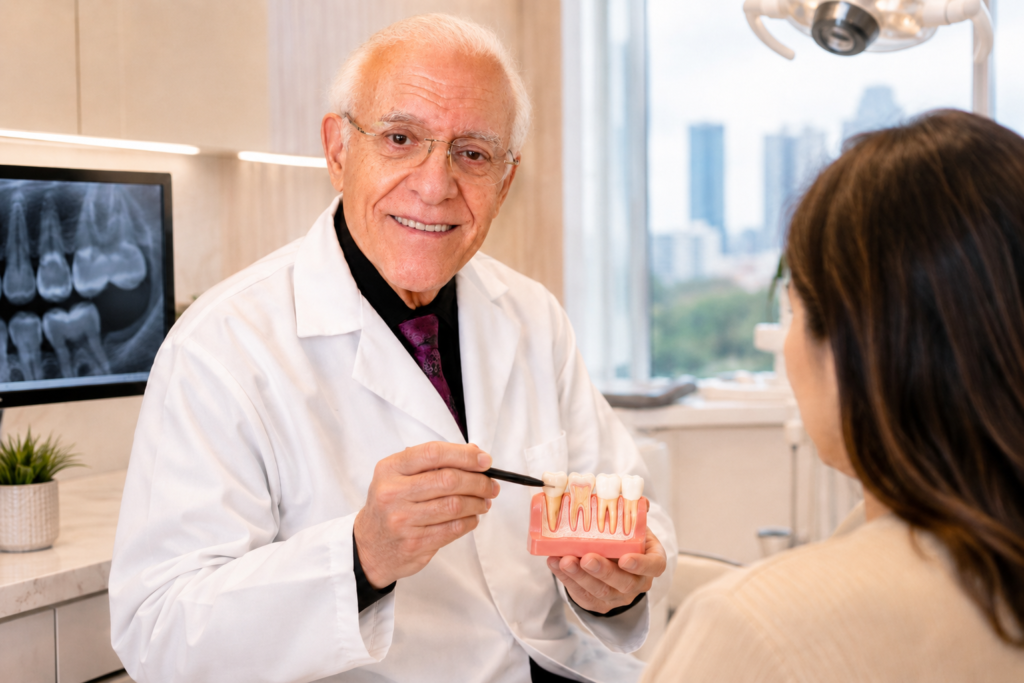
Dr. Waghalter can examine how the teeth contact, look for unusual wear patterns, evaluate existing restorations, and check whether certain teeth are receiving excessive pressure.
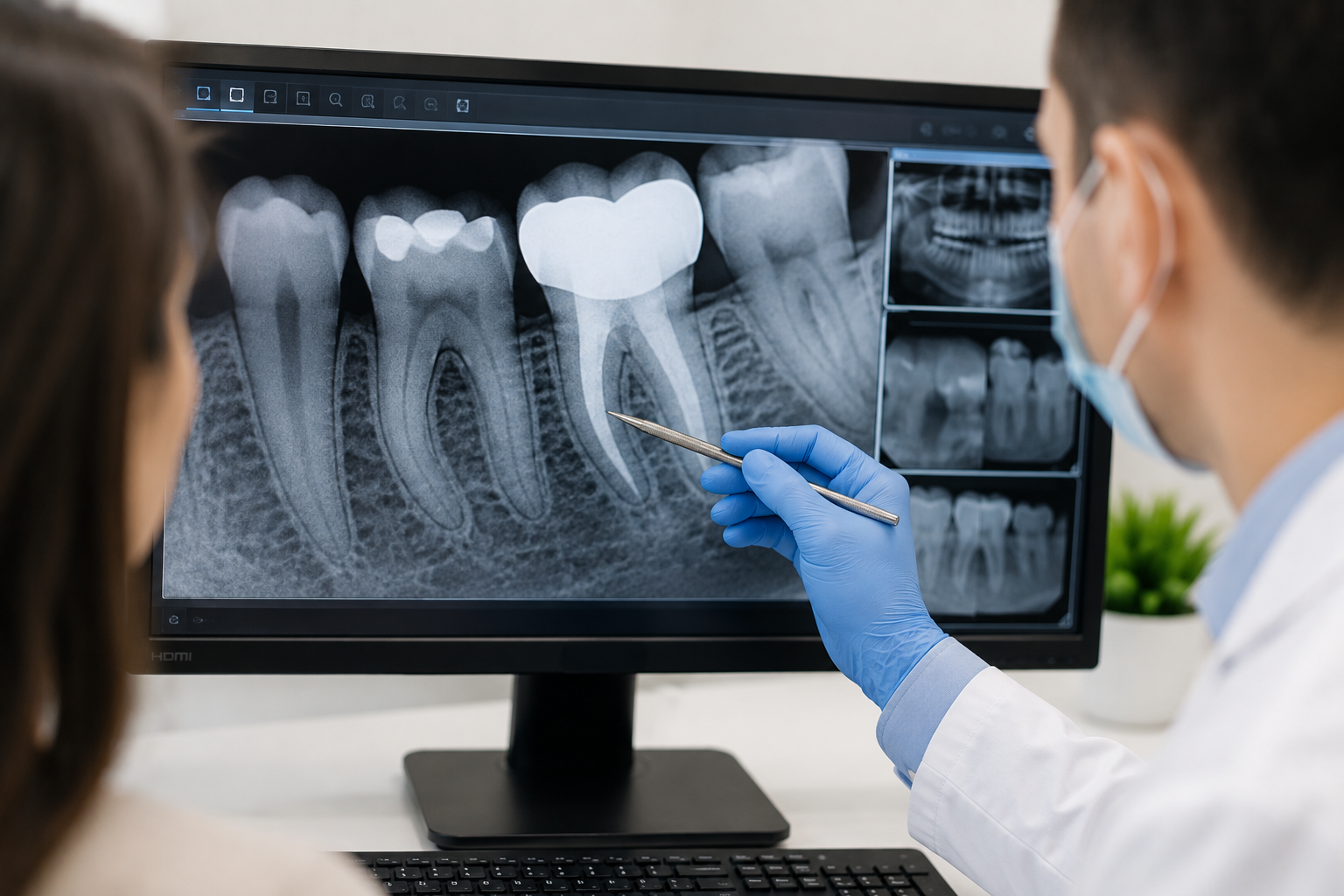
Dental X-rays may also be recommended when it is necessary to evaluate the roots, supporting bone, existing restorations, or areas that cannot be fully seen during a visual examination.
The goal is to understand why a tooth or area is experiencing stress rather than simply treating the symptom.
Grinding Can Change Your Bite Over Time
Clenching and grinding can generate considerable pressure on the teeth. Some people grind primarily while sleeping and may have no idea they are doing it.
Over time, this pressure may contribute to worn enamel, small fractures, damaged restorations, or tenderness when chewing.
Signs of grinding can often be identified during a dental examination even before the patient becomes aware of the habit.
Missing Teeth Can Affect More Than the Empty Space
When a tooth is lost, neighboring teeth may gradually shift toward the open area. The opposing tooth can also begin moving because it no longer has normal contact.
These changes can alter the way your entire bite functions.
Replacing a missing tooth is therefore not only about appearance. Depending on the individual situation, restoring the space may help maintain more stable tooth positioning and chewing function.
Dental Restorations Should Work With Your Bite
A filling or crown needs to do more than restore the shape of a damaged tooth. It should also fit naturally into the patient’s bite.
Even a small difference in height may cause a newly restored tooth to receive more pressure than intended.
That is one reason dentists carefully check and adjust the bite after restorative treatment. A well-designed restoration should feel comfortable while chewing and integrate naturally with the surrounding teeth.
Your Bite Changes Throughout Life
Teeth are not completely static.
Normal wear, dental treatment, missing teeth, gum and bone changes, grinding habits, and natural shifting can all influence tooth position over the years.
Regular dental visits give your dentist an opportunity to recognize these changes before they develop into more significant problems.
When Should You Have Your Bite Checked?
Consider scheduling an evaluation if you notice a new change in the way your teeth meet, repeated chipping, unexplained chewing discomfort, excessive tooth wear, or a restoration that suddenly feels different.
Dr. Richard Waghalter can evaluate the teeth, bite, existing dental work, and supporting structures to determine whether treatment or monitoring is appropriate.
A comfortable smile isn’t only about how your teeth look. It’s also about how well they work together.