
Seeing a little blood when you brush or floss may seem harmless, especially if it only happens occasionally. But if your gums bleed regularly, it may be a sign that the tissues supporting your teeth need professional attention.
Healthy gums generally should not bleed routinely. Persistent bleeding may be related to inflammation, gum disease, deeper periodontal pockets, or changes in the bone that supports your teeth.
For patients in Houston, Midtown, and the Museum District, understanding when bleeding gums are simply irritated—and when they may require a periodontal evaluation—can help protect your smile before a small concern becomes a more serious dental problem.
Why Do Gums Bleed?
Bleeding gums can happen for several reasons. Sometimes the cause is relatively simple, such as brushing too aggressively or beginning a new flossing routine.
However, recurring bleeding may be related to inflammation around the gumline.
Other warning signs can include:
- Red or swollen gums
- Gum tenderness
- Gum recession
- Persistent bad breath
- Sensitivity near the gumline
- Loose or shifting teeth
- Discomfort when chewing
When bleeding continues or appears together with other symptoms, a professional evaluation can help determine what is happening beneath the surface.
Learn more about Dr. Waghalter’s periodontal and comprehensive dental services
When Is Bleeding a Sign of Gum Disease?
One of the most common reasons for persistent bleeding is inflammation around the gums.
Periodontal disease can develop gradually and may not always cause significant pain in the early stages. Because of that, patients may overlook bleeding, swelling, or mild gum recession until the condition has progressed.
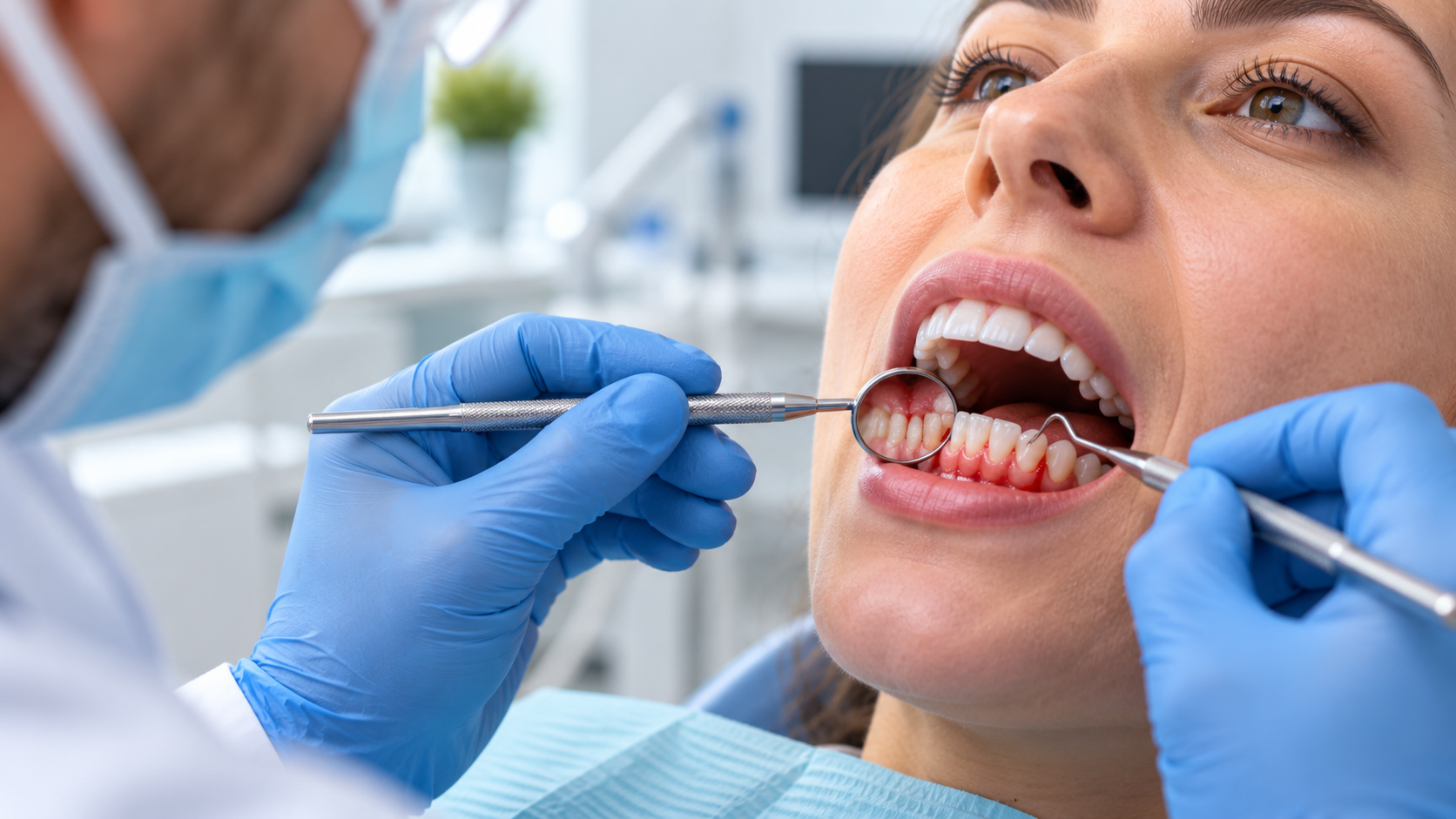
A periodontal examination can help evaluate:
- Gum inflammation
- Periodontal pocket depth
- Gum recession
- Tooth stability
- Supporting bone
- Changes around crowns, bridges, or other dental restorations
A small measuring instrument called a periodontal probe may be used to measure the spaces between the teeth and gums. Deeper measurements may indicate inflammation or periodontal disease that requires closer attention.
Why the Bone Under Your Gums Matters
Your gums are only one part of the foundation supporting your teeth.
The underlying jawbone also plays an important role in keeping teeth stable. When periodontal inflammation progresses below the gumline, it can affect the supporting bone over time.
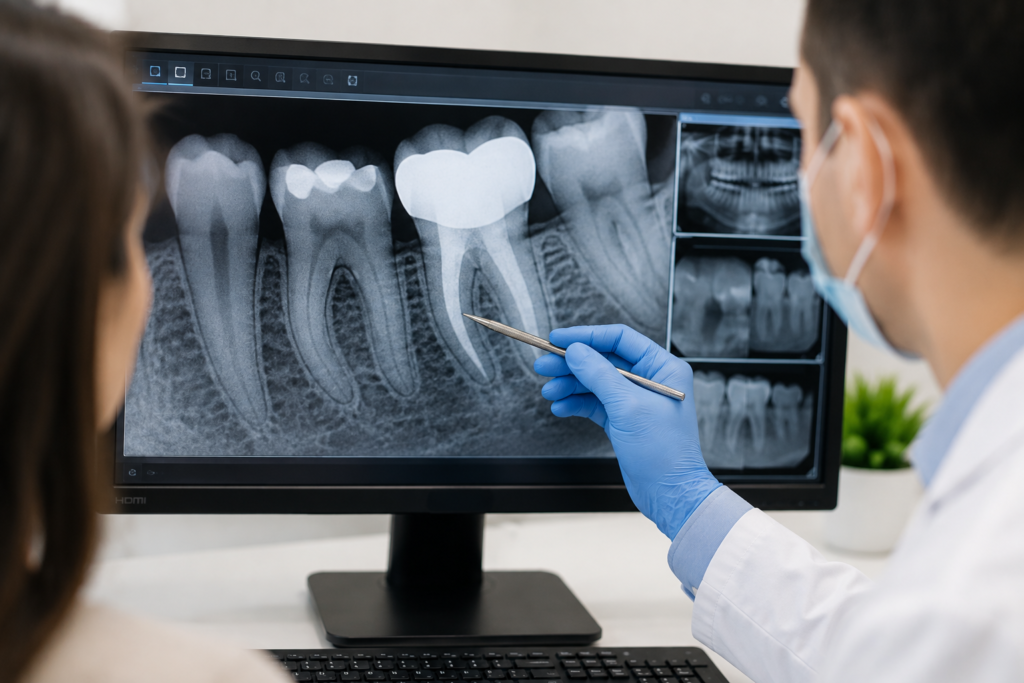
Dental examinations and appropriate imaging can help identify changes that may not be visible simply by looking in the mouth.
This is one reason patients should not assume that bleeding gums are only a minor or cosmetic problem.
What If Your Gums Are Receding Too?
Bleeding and gum recession can sometimes appear together.
Gum recession occurs when gum tissue moves away from the tooth, exposing more of the tooth or even part of the root.
Possible contributing factors can include:
- Periodontal disease
- Aggressive brushing
- Tooth position
- Grinding or clenching
- Changes in the gum tissue over time
Some patients first notice recession because one tooth appears longer than the others or becomes more sensitive near the gumline.
Because treatment depends on the cause, identifying why the recession is occurring is important.
Are Loose Teeth Part of Normal Aging?
Adult teeth should generally remain stable.
If a tooth begins to move, shift, or feel different when you bite or chew, it deserves professional attention.
Changes in tooth stability may be related to:
- Loss of supporting bone
- Gum disease
- Bite forces
- Grinding or clenching
- Trauma
- Other dental conditions
A loose tooth does not automatically mean the tooth must be removed. A complete evaluation of the tooth, gums, bone, and bite can help determine the appropriate treatment options.
Can Bleeding Gums Affect Existing Dental Work?
Healthy gum tissue and supporting bone are especially important around crowns, bridges, implants, and other restorations.
Periodontal health creates the foundation that helps support restorative dental work.
Patients who are considering more extensive dental treatment may benefit from having their gum and bone health evaluated first.
Explore Dr. Waghalter’s dental services
When Should You See a Periodontist for Bleeding Gums?
Consider scheduling an evaluation when:
- Your gums bleed repeatedly while brushing or flossing
- Bleeding continues for more than a short period
- Your gums are swollen, red, or tender
- You notice gum recession
- A tooth feels loose or has shifted
- You have persistent bad breath
- You notice an unpleasant taste in your mouth
- Your bite feels different
- You notice changes around an existing crown, bridge, or restoration
Even mild symptoms can be worth evaluating because periodontal conditions may progress without significant pain.
Why Early Evaluation Matters
The earlier a periodontal problem is identified, the more treatment options may be available.
Ignoring recurring bleeding can allow inflammation to continue and potentially affect the gum tissue and supporting bone.
Early evaluation can help determine whether the issue is related to simple irritation, gingivitis, periodontal disease, or another dental condition.
The goal is not only to treat symptoms, but also to protect the long-term health and stability of your teeth.
Periodontal Care in Houston
Dr. Richard B. Waghalter provides periodontal and comprehensive dental care for patients in Houston, including the Museum District and surrounding communities.
His approach focuses on evaluating the condition of the gums, teeth, bone, and bite before discussing treatment options.
If your gums bleed frequently, do not simply assume it is normal.
Healthy gums are an important part of keeping your natural teeth strong and stable.
View periodontal and dental services
Read more dental and periodontal articles
Visit Dr. Richard B. Waghalter in Houston’s Museum District
Richard B. Waghalter, DDS
Periodontics & Comprehensive Dentistry
4817 Main St., Suite 200
Houston, TX 77002
Located in the Houston Museum District
Phone: (713) 444-6767
If you are experiencing bleeding gums, gum recession, loose teeth, or other periodontal concerns, contact Dr. Waghalter’s office to schedule an evaluation and learn more about your treatment options.