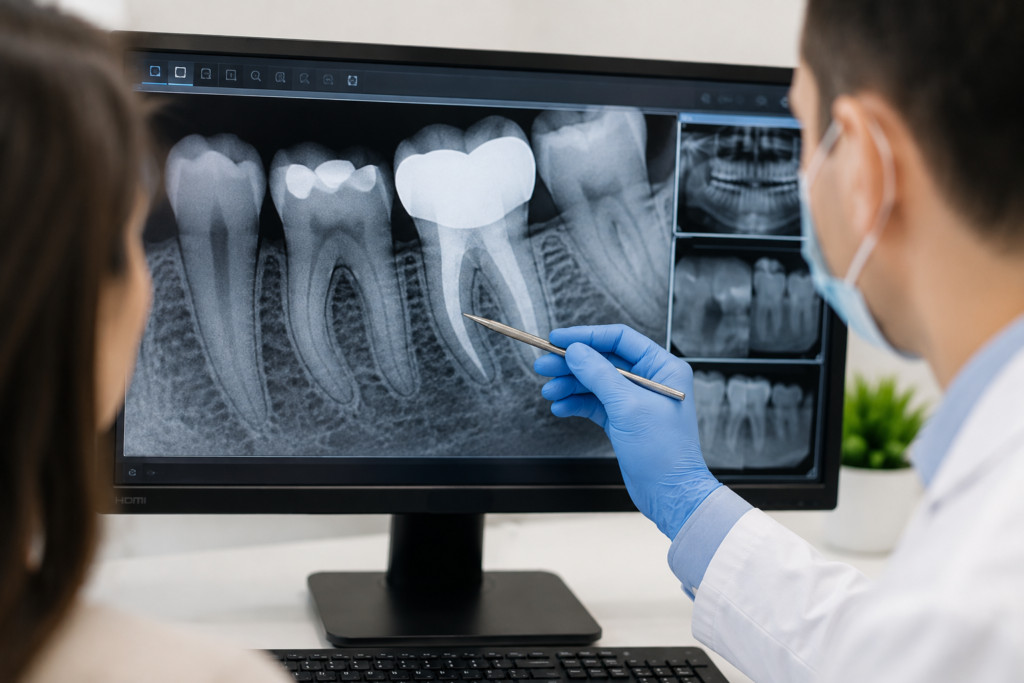

A cracked or broken tooth can happen unexpectedly. Biting into something hard, an old filling weakening the tooth, nighttime grinding, or everyday wear can all contribute to dental damage.
Some cracks are immediately painful, while others may cause only occasional sensitivity or discomfort when chewing. Because symptoms can vary, it is important to have the tooth evaluated before the damage progresses.
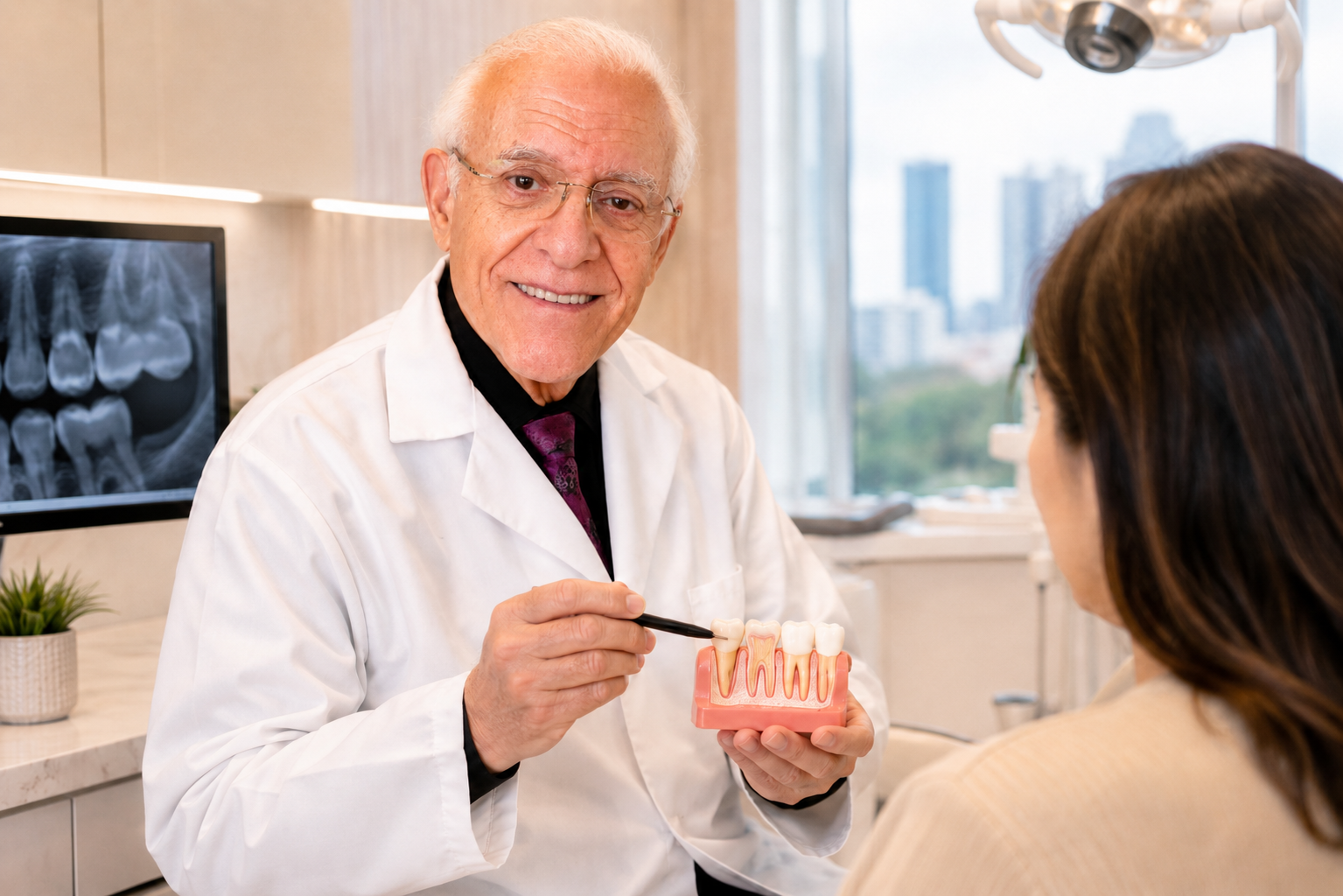
Dr. Richard Waghalter provides personalized dental evaluations for patients in Houston’s Museum District, helping determine the condition of the tooth, the source of discomfort, and which treatment options may be appropriate.
One of the first goals is often to relieve biting forces on the affected tooth so the patient can become more comfortable while the condition is evaluated.

Not Every Cracked Tooth Feels the Same
Dental cracks can range from small surface imperfections to deeper fractures involving the internal structure of the tooth.
You may notice:
- Pain when biting or when releasing your bite
- Sensitivity to hot or cold
- A sharp or rough edge on the tooth
- Intermittent discomfort
- A visible chip or fracture
- Tenderness around the tooth
- A filling or restoration that suddenly feels different
Sometimes there are very few symptoms at first. That is why delaying an evaluation can make it more difficult to determine how much of the tooth has been affected.ore difficult to determine how much of the tooth has been affected.
Can a Damaged Tooth Be Restored?
The answer depends on the location, depth, and extent of the damage.
Dr. Waghalter evaluates each tooth individually before discussing treatment. An important question is whether the fractured portion of the tooth can be stabilized and protected.
In some cases, a dental crown may be used to hold weakened or broken portions of the tooth together and help prevent movement that can cause discomfort.
Another important consideration is whether the nerve inside the tooth has been affected. If the crack extends into the pulp or causes significant inflammation, root canal treatment may be necessary before a crown is placed.
Depending on the patient’s needs, treatment options may include repairing or replacing an existing restoration, placing a new filling, protecting the tooth with a dental crown, performing root canal treatment when indicated, or considering other restorative care.
The goal is to preserve as much healthy natural tooth structure as possible while restoring comfort, function, and long-term stability.
The answer depends on the location, depth, and extent of the damage.
Dr. Waghalter evaluates each tooth individually before discussing treatment. An important question is whether the fractured portion of the tooth can be stabilized and protected.
In some cases, a dental crown may be used to hold weakened or broken portions of the tooth together and help prevent movement that can cause discomfort.
Another important consideration is whether the nerve inside the tooth has been affected. If the crack extends into the pulp or causes significant inflammation, root canal treatment may be necessary before a crown is placed.
Depending on the patient’s needs, treatment options may include repairing or replacing an existing restoration, placing a new filling, protecting the tooth with a dental crown, performing root canal treatment when indicated, or considering other restorative care.
The goal is to preserve as much healthy natural tooth structure as possible while restoring comfort, function, and long-term stability.
When a Cracked Tooth May Need to Be Removed
Some fractures extend too far below the gumline to be predictably restored.
In certain situations, a procedure to expose more of the tooth structure may be considered. However, if the crack extends deeply below the gumline and attempting to expose it would compromise the strength of the root, surrounding tissues, or the esthetic appearance of the area, extraction may be the more appropriate option.
Dr. Waghalter considers the location of the crack, the amount of healthy tooth structure remaining, the condition of the root, the surrounding bone and gums, the patient’s bite, and the long-term prognosis before recommending removal.
When extraction is necessary, replacement options such as a dental implant, bridge, or removable partial denture may also be discussed.
Early Evaluation Can Make a Difference
A cracked tooth does not always mean the tooth must be removed. In many cases, early diagnosis gives the dentist more treatment options.
If you notice pain when chewing, sensitivity, a broken filling, a chipped tooth, or a sudden change in how your bite feels, having the tooth evaluated promptly can help determine the most appropriate next step.